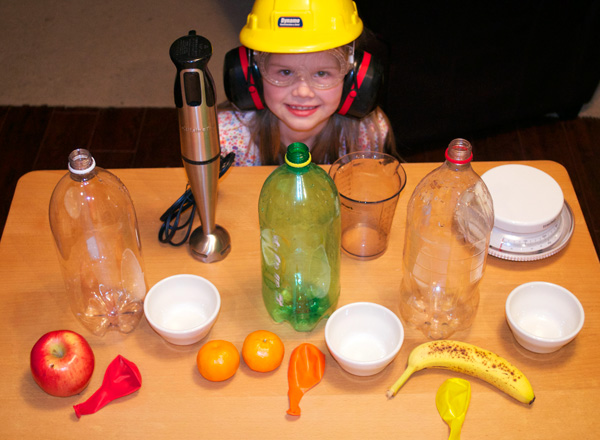
Can you blow up a balloon with a banana? What about an apple? Oranges?
Lilly knows. She also knows about the value of a control in an experiment. And that fruit gets moldy. Ew. Luckily, we don't know if it stinks because we disposed of it with nasal protection. (No, we didn't just throw away the bottles intact. We're environmentally conscious Northwesterners, duh.)
I know you're dying to know, so here are the results, straight from Lilly's analysis.
Control: The Control did nothing. It's supposed to show what would happen if we didn't put any fruit in it.
Apple: The apple had mold and the mold was able to chew on stuff to make air. When it chews on it the water kind of evaporated but because the balloon was on top it made the balloon blow up.
Banana: The mushed up banana turned a dark brown and it kind of blew the up more than the apple. The mold cycle (that's what I call what happened) was the same as the apple. The mold cycle nibbles on the fruit and when the mold chews on it the water comes out of the mold's mouth and blows up the balloon.
Orange: The orange balloon was the most blown up because it had sweeter stuff and the mold likes the sweet stuff and the mold grows and grows and grows because it had it for breakfast each time.
So there you have it. If you want to start the mold cycle, go with oranges.